
The move to e‑Invoicing in Malaysia (via MyInvois by LHDN) changes how travel agencies issue, store, and share invoices, credit notes, and receipts. This guide explains what changes, common travel scenarios, and how WauHub helps you stay compliant without slowing down sales.
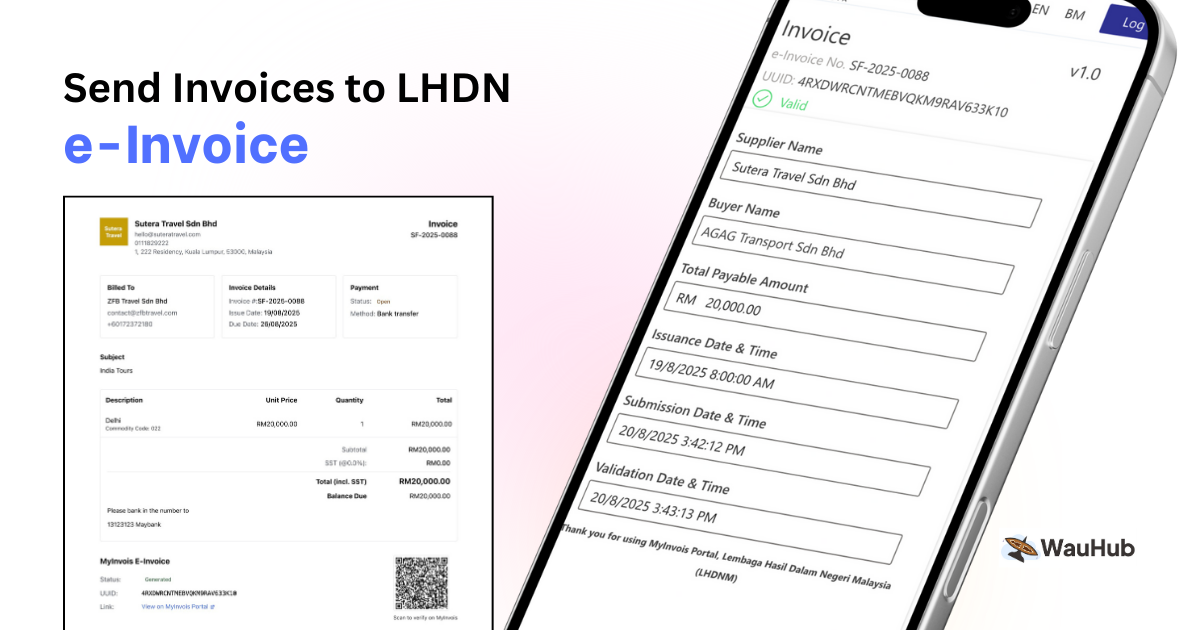
Why e‑Invoicing matters for travel agency
Travel sales often involve deposits, balance payments, supplier commissions, multi‑currency, and last‑minute changes. e‑Invoicing brings structure to these flows so that what you charge, what you collect, and what you report to LHDN are always aligned.
- Better cash flow tracking across deposits and balances
- Cleaner audit trail for refunds, add‑ons, and date changes
- Less manual re‑keying between systems and Excel files
- More professional experience for customers and corporate buyers
What changes with MyInvois
At a high level, e‑Invoicing means:
- Each sale needs a compliant e‑Invoice payload submitted to LHDN’s platform
- Adjustments use e‑Credit Notes or e‑Debit Notes linked to the original invoice
- Buyer details matter more (e.g., TIN when relevant), especially for B2B
- You keep the customer experience simple while the system handles compliance
Note: Specific obligations depend on your business profile and transaction type (B2B, B2C, B2G). Always consult your tax advisor for your exact scenario.
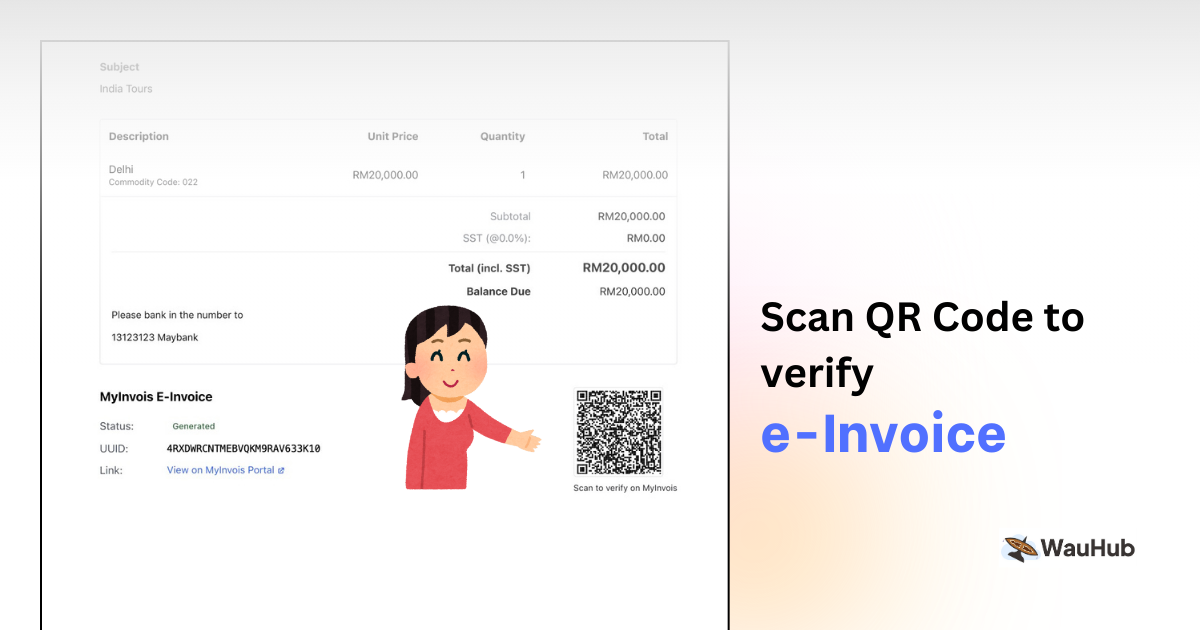
Common travel scenarios and how to handle them
1) Deposits and balance payments
- If a security deposit is refundable, no e‑Invoice is required when it is collected
- If the deposit is non-refundable, issue an e‑Invoice for the deposit and a separate e‑Invoice for the balance
- Reference the booking/order for continuity and clean reporting
2) Package changes and add‑ons
- Increase: issue an e‑Debit Note referencing the original e‑Invoice
- Decrease without returning money: issue an e‑Credit Note referencing the original e‑Invoice
- Money returned to the customer: issue an e‑Refund Note referencing the original e‑Invoice
3) Agent vs. principal model
- If you buy and resell a flight ticket as principal, your agency invoices the customer and records the airline purchase separately
- If you sell a flight ticket on behalf of the airline, the airline invoices the customer and issues a self-billed e‑Invoice for the commission paid to your agency
For the everyday document flow, read what travel agencies issue for customers and suppliers.
4) International customers and multi‑currency
- Keep the transactional currency and provide the MYR equivalent in reporting where required
- Capture buyer details consistently even if the traveler is foreign
How WauHub helps you comply (without hassle)
WauHub is built for Malaysian travel workflows and e‑Invoicing:
- Malaysian‑ready templates with SST fields and local formatting
- MyInvois‑ready data model mapped to required fields
- Built‑in validations to catch missing buyer info and totals mismatches
- Optional TIN lookup and taxpayer checks before issuing B2B e‑Invoices
- One‑click sharing via link/WhatsApp and payment collection (FPX, cards, QR)
- Automatic document trail: invoice → payment → credit/debit notes
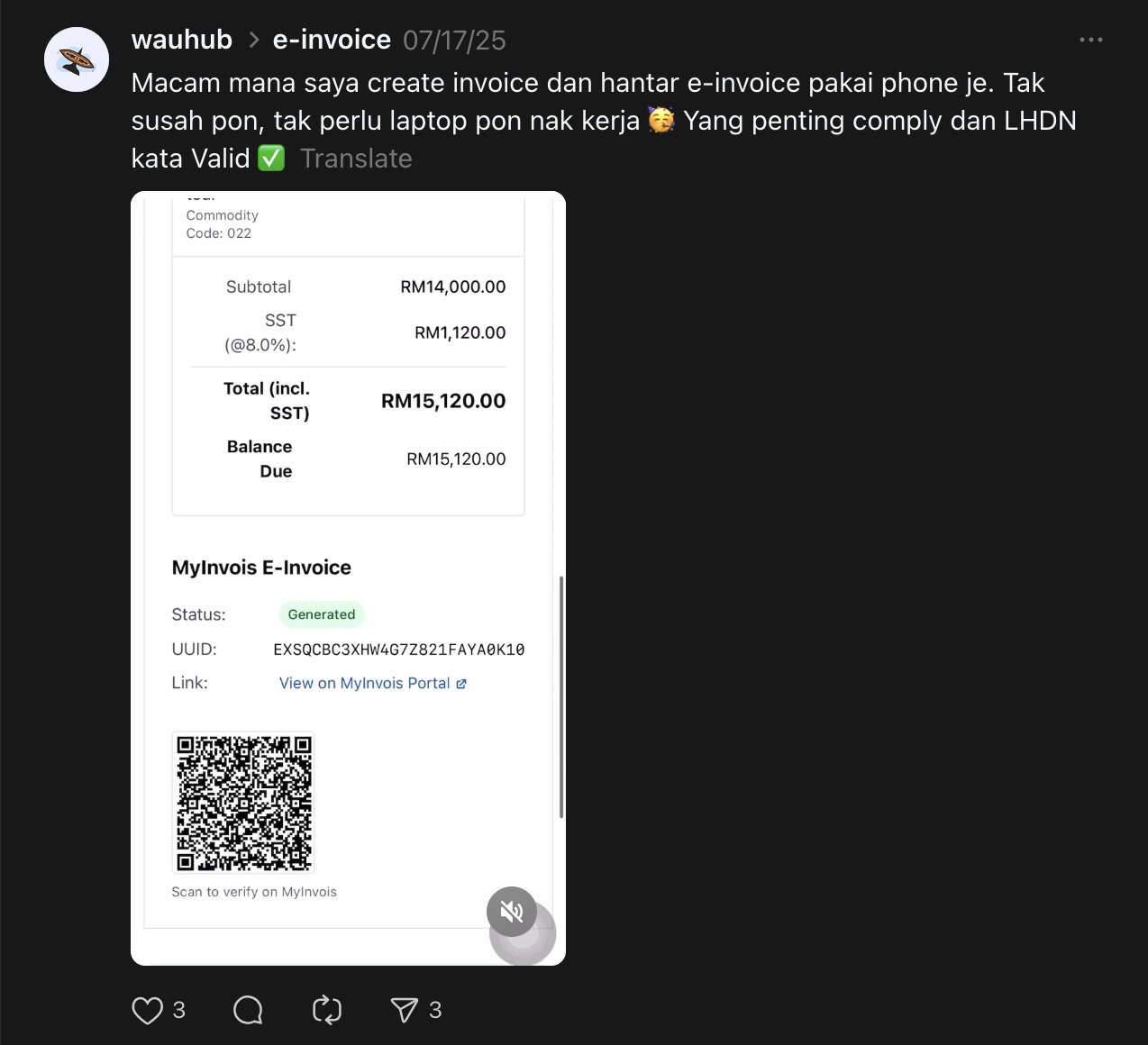
See our live demo here at threads https://www.threads.com/@wauhub/post/DMMMhfCzAeB
Step‑by‑step setup in WauHub
- Add your business profile: legal name, registration, SST settings
- Create products: tours, add‑ons, fees (include tax applicability)
- Verify buyer info for B2B (name, TIN when relevant)
- Issue invoice for deposit; send secure link for payment
- Add balance invoice on confirmation; auto‑reconcile payments
- If plans change, create e‑Credit/Debit Notes referencing the original
- Keep everything synced for clean reporting and audit trail
Tips to stay out of trouble
- Be consistent with booking IDs across invoices and notes
- Avoid free‑text taxes; use configured SST settings
- Separate your role (principal vs. agent) per product to avoid confusion
- Use templates for common tour types to reduce mistakes
- Keep customer communication simple; let the system handle compliance
FAQ
Do I need e‑Invoice for walk‑in/consumer sales?
It depends on the latest LHDN rules for your profile and thresholds. Many agencies issue compliant documents for all sales to keep records consistent. Check with your tax advisor.
What about refunds?
Use an e‑Refund Note linked to the original e‑Invoice when money is returned to the customer. Use an e‑Credit Note when reducing the original amount without returning money.
Can I collect a deposit first?
Yes. Issue an invoice for the deposit when you collect it, then another invoice for the remaining balance.
Ready to simplify e‑Invoicing and bookings? Contact us and we’ll walk you through a setup tailored to your travel business.