
You spent RM2,000 on Facebook ads last month. Got 50 leads. Converted 8. That is RM250 per customer acquired.
Meanwhile, the 200 customers who booked with your agency last year? You never contacted them again. Not a thank-you message. Not a birthday greeting. Not a “hey, school holidays are coming, here are our new packages.”
Here is the math that should keep you up at night: convincing an existing customer to book again typically costs RM0 to RM50. A WhatsApp message, a phone call, a personalised offer. That is 5 to 10 times cheaper than acquiring a new customer through ads.
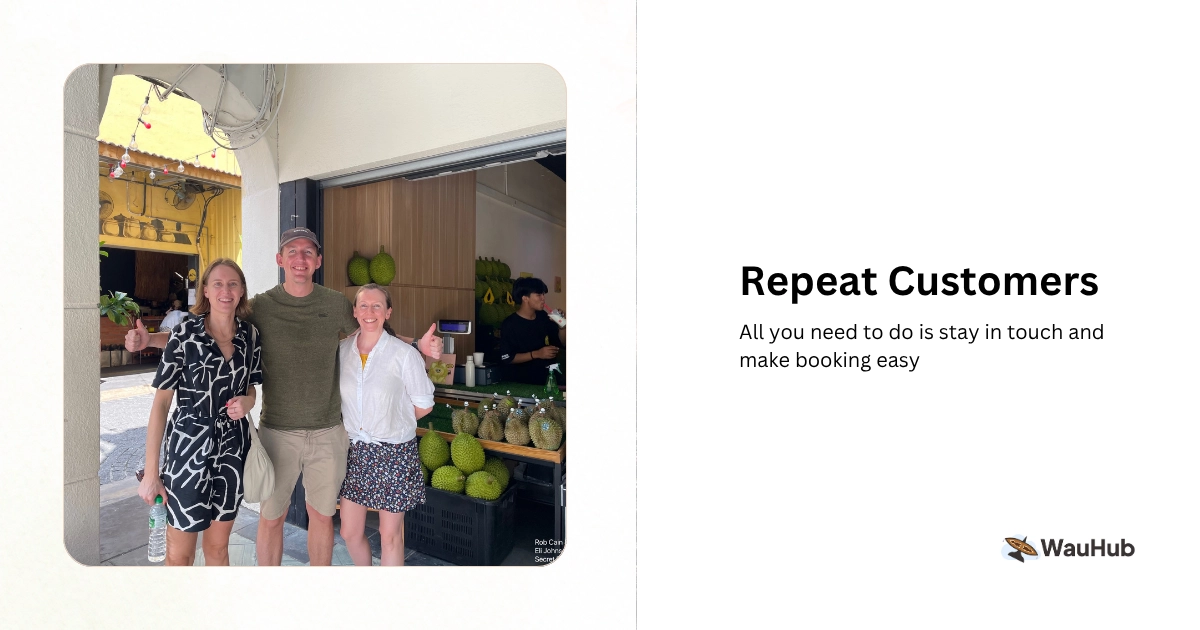
Your past customers already trust you. They already experienced your service. They already have your number saved. All you need to do is stay in touch and make booking easy.
This article shows you how to systematically turn one-time travellers into repeat customers.
Why Malaysian Travel Agencies Lose Repeat Business
1. No Customer Database
This is the most fundamental problem. After a trip is complete, the customer data is “done.” Passport copies are in a WhatsApp chat. Contact details are in a spreadsheet somewhere. Booking history is in an old invoice.
When you want to contact customers who travelled with you in 2025, you cannot pull that list. You would need to dig through a year of invoices and manually compile names and phone numbers.
Without a clean customer database, retention marketing is impossible before it even starts.
2. No Post-Trip Follow-Up
After the tour ends, the relationship ends. The customer had an amazing time in Bali. They felt taken care of. They want to tell their friends about your agency.
But you never call. You never ask for feedback. You never send a thank-you message. Three months later, when they want to book their next trip, they cannot remember your agency name. They Google “travel agency near me” and find your competitor.
The window for post-trip engagement is 3 to 7 days after the trip. After that, the emotional high fades and the connection weakens.
3. No Segmentation
A honeymooner and a corporate travel manager have completely different needs. A family with young children and a group of retirees want different destinations, different hotel standards, different activities.
Sending everyone the same generic “Raya Special: Japan 6D5N RM3,999” WhatsApp broadcast does not work. The honeymooner wants romantic destinations. The family wants kid-friendly packages. The retirees want comfortable, slow-paced itineraries.
Without segmentation, your marketing messages are irrelevant to most recipients. Irrelevant messages get ignored.
4. No Birthday or Anniversary Outreach
How many of your customers’ birthdays do you know? How many agencies send a simple “Happy Birthday! Here’s 5% off your next trip with us”?
Almost none. Yet birthday outreach has some of the highest engagement rates in marketing. It is personal, unexpected, and makes the customer feel valued.
You already collect IC numbers (which include date of birth) for most bookings. The data is there. You just are not using it.
The 5-Step Repeat Customer Strategy
Step 1: Build a Clean Customer Database
Every booking should create or update a customer record with:
- Full name and phone number
- Email address
- Travel history (destination, date, package type)
- Preferences (beach, cultural, adventure, religious)
- Budget range
- Special notes (vegetarian, window seat preference, anniversary dates)
After a year of disciplined record-keeping, you should be able to filter: “Show me all customers who booked a Japan trip in 2025” or “Show me all customers who spent more than RM5,000 per booking.”
This is your retention goldmine. Start building it today.
Step 2: Post-Trip Thank You and Feedback (Within 3 Days)
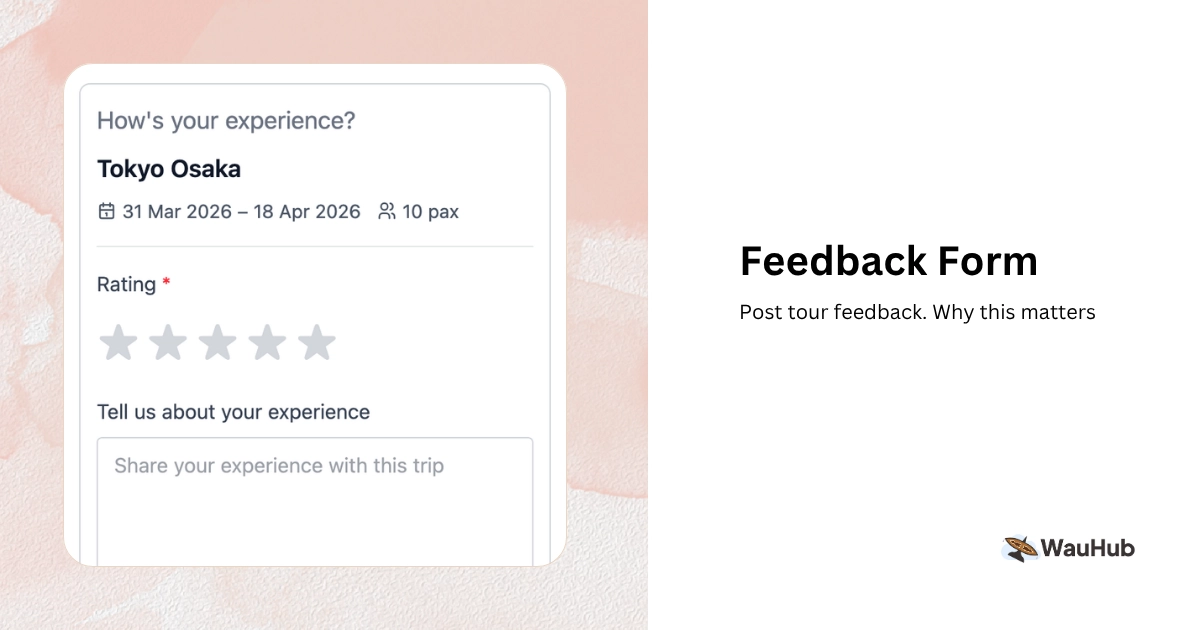
Within 3 days of the trip ending, send a WhatsApp message:
“Hi Puan Farah, thank you for travelling with us to Bali! We hope the trip was everything you hoped for. We would love your feedback — it helps us improve for future travellers. [Feedback Form Link]”
Keep the feedback form short: 3 to 5 questions maximum. Rating (1-5), best part of the trip, anything to improve, would they recommend you.
Why this matters: customers who receive a post-trip follow-up are significantly more likely to rebook. They feel valued. They feel heard. And if there was a problem, you catch it before it becomes a negative Google review.
The feedback also gives you content. With permission, positive feedback becomes testimonials on your website and social media.
Step 3: Segment Your Customers
Once you have a database, segment it. Common segments for Malaysian travel agencies:
By destination preference:
- Beach and island (Bali, Maldives, Langkawi)
- Cultural and historical (Japan, Korea, Turkey, Europe)
- Adventure (New Zealand, Nepal, Patagonia)
- Religious (Umrah, Haji, Holy Land)
By budget range:
- Budget (under RM2,000/pax)
- Mid-range (RM2,000-5,000/pax)
- Premium (RM5,000+/pax)
By frequency:
- First-timer (1 trip)
- Returning (2-3 trips)
- Loyal (4+ trips)
By travel type:
- Family with kids
- Couple or honeymoon
- Solo traveller
- Corporate or incentive
- Group or friends
Now your marketing becomes targeted. “New Hokkaido Winter Package” goes only to customers who previously booked Japan or showed interest in East Asia. “Luxury Maldives 5-Star Resort” goes to premium-budget customers who prefer beach destinations.
Targeted messages convert. Generic broadcasts get muted.
Step 4: Trigger-Based Outreach
Instead of random promotional blasts, set up trigger-based messages that go out at specific times:
6 months after last trip:
“Hi Encik Hafiz, it has been 6 months since your Turkey trip. Ready for the next adventure? We have some exciting new destinations for 2026.”
Birthday month:
“Happy Birthday, Puan Siti! 🎂 To celebrate, we would like to offer you RM200 off your next trip with us. Valid this month only.”
School holiday lead-up (4-6 weeks before):
“School holidays are coming! We have prepared family-friendly packages for March. Early booking gets the best rooms. Here are our top picks for families.”
Anniversary of booking:
“One year ago, you went to Seoul with us! Time for Round 2? Korea is stunning in autumn. Would you like to see our latest packages?”
These messages feel personal because they are. They arrive at relevant moments. They reference the customer’s actual history with your agency. They create a reason to engage.
Step 5: Referral Program
Your happiest customers are your most effective salespeople. A recommendation from a friend carries more weight than any Facebook ad.
Create a simple referral program:
“Refer a friend to book with us, and both of you receive RM100 off your next booking.”
The structure matters:
- Both the referrer and the new customer benefit (creates mutual motivation)
- The reward is applied to a future booking (ensures retention, not just referral)
- Track referrals in your system so you can thank the referrer
You do not need a complex loyalty app. A simple tracking system that records “Customer A referred Customer B” and automatically applies the discount is sufficient.
The Numbers That Matter
Track these 4 metrics to measure your retention efforts:
| Metric | Formula | Target |
|---|---|---|
| Repeat Booking Rate | (Repeat customer bookings ÷ Total bookings) × 100 | 25%+ |
| Customer Lifetime Value | Average booking value × Average number of trips per customer | 3× single trip value |
| Referral Rate | (Referred bookings ÷ Total bookings) × 100 | 10%+ |
| Post-Trip Feedback Rate | (Feedback responses ÷ Completed trips) × 100 | 40%+ |
If your repeat booking rate is below 15%, you have a retention problem. Start with Steps 1 and 2 (database and post-trip follow-up). These two changes alone typically move the needle.
If your referral rate is below 5%, your customers may be satisfied but not delighted. Review the trip experience and your post-trip engagement.
How WauHub Supports Customer Retention
Retention requires data, and data requires a system. WauHub provides the foundation:
Complete customer profiles: Every booking automatically builds the customer’s travel history. Name, contact details, destinations visited, amount spent, dates travelled, and special preferences, all in one place.
Customer list with filters: Filter by last booking date, destination, spending range, or any tag you apply. “Show me all customers who booked beach holidays in 2025 and spent more than RM3,000” is a single search.
Notes and tags for segmentation: Tag customers with preferences: “vegetarian,” “honeymoon interest,” “prefers business class,” “travels with elderly parents.” Use these tags to segment your outreach.
Returning vs. new customer visibility: Your dashboard shows how many of this month’s bookings are from returning customers versus new ones. Track the trend month over month.
When combined with WauHub’s quotation and lead management features, your sales team can convert returning customer enquiries faster because they already have the customer’s history and preferences.
Your Next Step
Start with a simple exercise. Can you, right now, pull a list of every customer who booked with your agency in the last 12 months?
If yes, great. Now send them a message. Not a promotion. Just a “Hi, how have you been? Any travel plans this year?”
If no, start building your customer database today. Every booking from today onwards should create a proper customer record.
Your past customers are your cheapest, easiest path to more bookings. Stop ignoring them.
Your past customers are your best future bookings. Start building relationships with WauHub.
We will show you how customer profiles, travel history tracking, and filtering work together to make retention marketing simple and effective.